

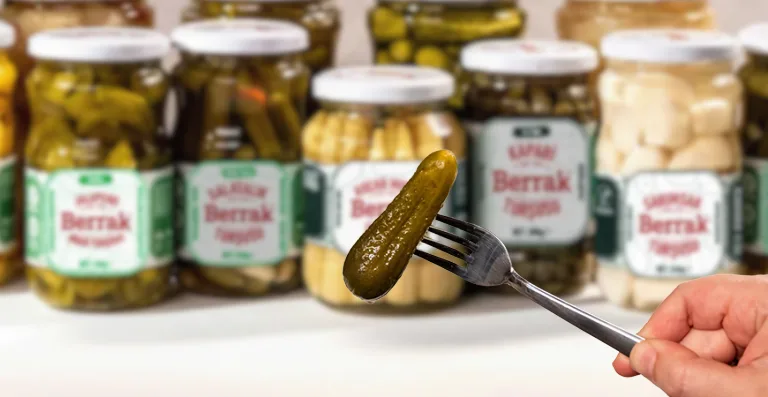
Pickles are not merely a garnish or a tangy flavor sitting quietly at the side of the table. They are a cultural heritage that carries the wisdom of the past to today’s tables while blending tradition with food safety. At the same time, they hold significant economic value at both micro and macro levels. In this article, we explore pickles not just as a flavor but as a multi-layered food product.
The Silent Hero of Food Safety
Fermented products are naturally durable. Pickles made with salt, acidity, and probiotic bacteria prevent the growth of pathogens throughout their shelf life, providing a safe space for consumption. When traditional methods are combined with modern production techniques, facilities operating in accordance with HACCP standards ensure that pickles are not only healthy but also reliable food products.
Today, in discussions about sustainable food production, naturally fermented products like pickles are gaining greater recognition. Their production method, which does not require additives, is also considered a practice that helps reduce environmental impact.
Cultural Memory Preserved in a Glass Jar
Pickles represent the memory of local cuisines. Recipes that vary according to each region’s climate, soil, and traditional methods are strong reflections of cultural diversity. In Southeastern regions, the dominance of hot peppers; in the Black Sea region, cabbage; and in the Aegean region, pickles made with local ingredients such as artichokes or okra reflect the unique identity of each geography.
Jars preserve not only vegetables but also the season in which they were harvested, the vinegar that was boiled, the recipes that were passed down, and even the stories carried through generations. In this sense, pickles are not just food but also a medium of cultural expression.
Economic Value and Export Potential
The growing global demand for fermented products has transformed pickles from a product aimed solely at domestic markets into a global player. Many pickle producers operating in Türkiye’s Aegean and Marmara regions export to markets in Europe, the Middle East, and the United States, generating significant foreign currency revenue.
Pickles appeal to a wide range of producers, from small-scale manufacturers to large brands, offering low waste and high added value. In addition, their labor-based production model contributes to socioeconomic development by creating employment opportunities, especially in rural areas.
There Is More Inside the Jar
Pickles are a multidimensional product with scientific, cultural, and economic significance. For this reason, evaluating them solely for their flavor would be incomplete. This deeply rooted tradition deserves a greater place in the food policies of the future. When supported by smart production techniques and strong branding strategies, pickles will continue to increase their value not only on dining tables but also in global markets.