

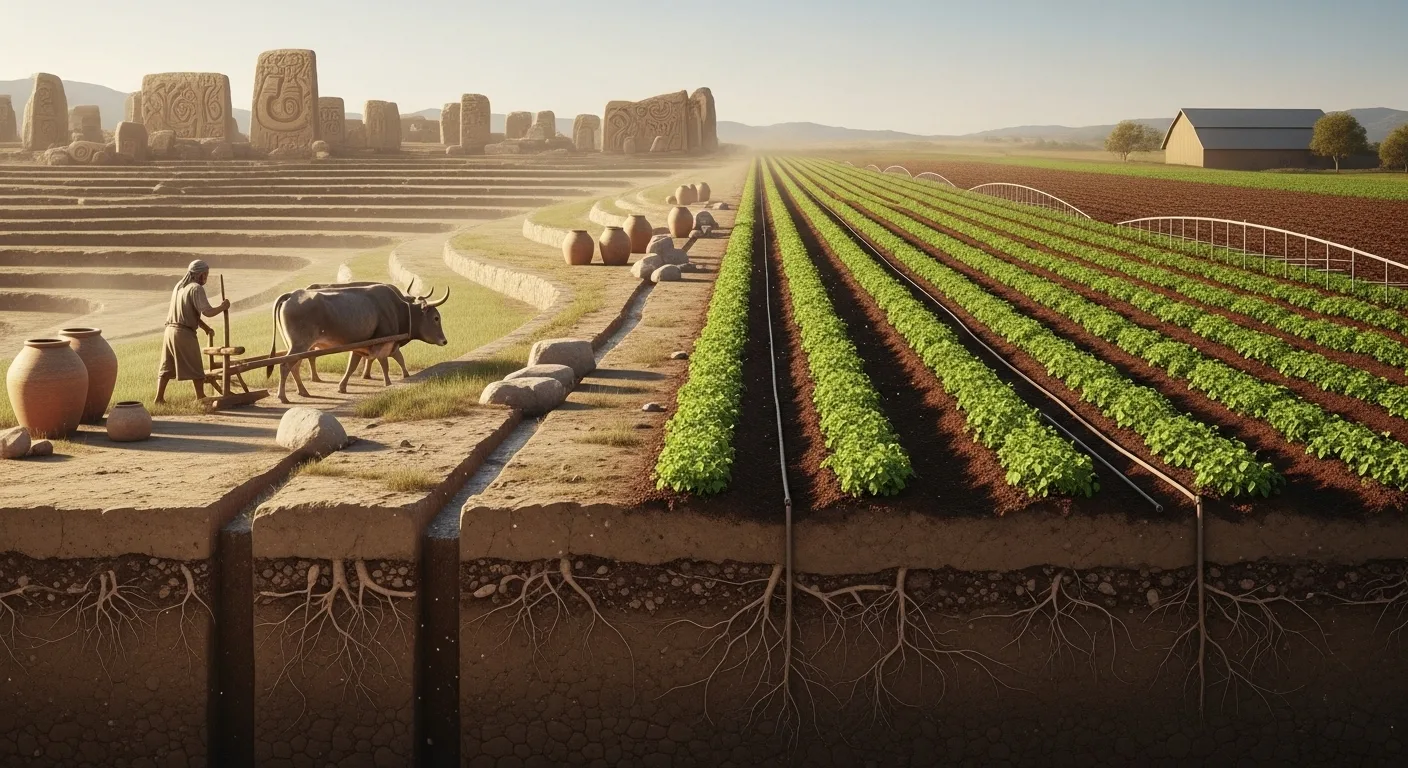
Agriculture is one of the most deeply rooted and transformative actions in human history. Yet the farming practices we carry out today with modern equipment and advanced technologies trace their origins back thousands of years, to the irrigation canals of Mesopotamia, the stone terraces of Egypt, and the ancient gardens of Anatolia. Many sustainable practices being rediscovered today are, in fact, reflections of ancient agricultural techniques.
The Agricultural Heritage of the Ancient World
Mesopotamia: The Birth of Civilization Through Irrigation
Situated between the Euphrates and Tigris rivers, Mesopotamia is considered the place where the world’s first agricultural revolution took place. This civilization pioneered canal-based irrigation, making land suitable for cultivation, and establishing planting calendars. The dams and guiding embankments built to control seasonal floods were the first steps toward today’s irrigation infrastructure.
Ancient Egypt: Farming in Rhythm with the Nile
The ancient Egyptians created a system that allowed them to harvest more than one crop per year by following the flooding cycle of the Nile River. Along with the fertile alluvial soil left behind after the floods, they developed seasonal planting, water retention basins, and soil cultivation practices. These methods preserved the soil’s nutrient balance through natural means.
Anatolia: Garden Culture and the Memory of Seeds
In the geography of Anatolia, the long-standing use of local seeds, the tradition of kitchen gardens, and techniques such as mixed cropping, or polyculture, shed light on today’s agroecological approaches. Especially during the Hittite period, recorded systems of crop exchange and agricultural laws already demonstrated the importance of sustainability even in that era.
The Place of Ancient Wisdom in Modern Agriculture
Today’s climate crisis, soil depletion, and loss of biodiversity are beginning to push the limits of modern agriculture. At this point, ancient practices that are coming back into focus are not merely nostalgic, but once again functional.
- Terrace farming is being reintroduced today to prevent soil erosion on steep slopes.
- Biodiversity-based planting systems offer solutions to the ecological problems caused by monoculture farming.
- Traditional fertilization and composting methods are seen as sustainable alternatives to chemical fertilizers.
- The use of trees for shade and wind control is gaining importance both for creating microclimates and for carbon sequestration.
Inspired by Zeytursan: Producing for the Future with the Wisdom of the Past
At Zeytursan, we believe that production carries a memory that comes not only from today, but from thousands of years ago. For this reason, we:
- Support the preservation and multiplication of local seeds.
- Revive traditional methods with small producers and blend them with modern techniques.
- Advocate that agriculture is not only an economic activity, but also a cultural value.
Can the Past Guide the Future?
These codes from history remind us of this: a model of agriculture that imitates nature, respects its rhythm, and values local knowledge may also be the key to the future. Because sometimes, the most innovative solution is hidden in the soil of the past.