

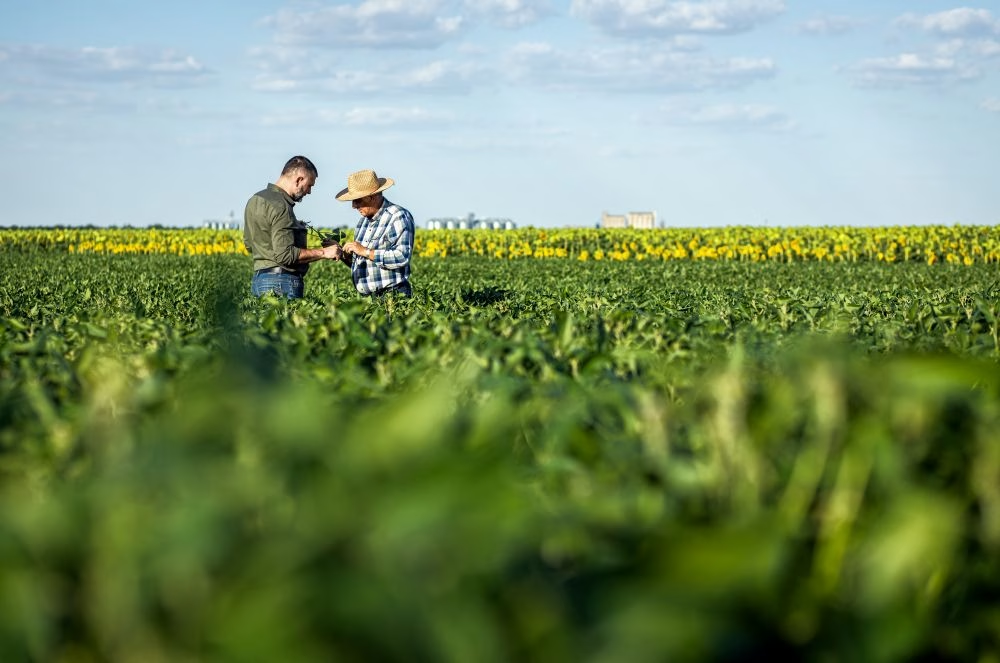
Agriculture is not only a field of production based on technical knowledge; it is also a way of life shaped by experience. The language of the soil, the signals of the climate, the behavior of crops, and the cycles of nature are often learned not from books, but from years of accumulated practice. For this reason, knowledge in agriculture is passed down not only through research centers but also across generations in fields, vineyards, and orchards. As the agricultural sector undergoes rapid transformation today, the experience held by master farmers has become more valuable than ever.
The Wisdom That Teaches How to Read the Soil
Producers who have worked the same land for many years develop an intuition that allows them to notice even the smallest changes in nature. Understanding upcoming weather changes from the smell of rain, estimating soil productivity from its texture, or identifying nutrient deficiencies from the color of plant leaves are forms of knowledge that stem from experience rather than formal education. When combined with modern agricultural technologies, this intuitive knowledge strengthens production processes. No matter how advanced data and technology become, the person who knows the land best is often the one who has worked it for years.
Building Bridges Between Generations
Knowledge transfer in agriculture is not only about sharing technical methods. It also involves passing on production culture, work discipline, and respect for nature. While younger producers may adapt more quickly to technology, experienced farmers are better at interpreting long-term natural cycles. The combination of these two areas of knowledge creates a powerful synergy for the future of agriculture.
Next-generation producers can enhance production planning through data-driven farming practices, sensor technologies, and digital analytics, while the experience of master farmers helps ensure these technologies are interpreted and applied correctly.
The Rise of Mentorship in Modern Agriculture
Across the world, mentorship programs in agriculture are becoming increasingly common. Experienced farmers guide younger producers not only in production techniques but also in areas such as risk management, crop planning, and market dynamics. This approach helps prevent the loss of knowledge in rural areas while strengthening the sustainability of agriculture. Knowledge gains value as it is shared, and production culture remains alive.
The Meeting Point of Traditional Knowledge and New Technologies
The future of agriculture cannot rely solely on technology or solely on tradition. Real transformation happens when these two worlds work together. For example:
- Data obtained from soil sensors can be more accurately interpreted through the observations of experienced farmers.
- Field analyses based on satellite imagery can be supported by the regional knowledge of local producers.
- Modern irrigation techniques can be applied alongside traditional water management practices.
This integration opens the door to more efficient and sustainable production models.
Preserving Knowledge for the Future of Agriculture
Migration from rural areas to cities is increasing the risk of losing valuable agricultural knowledge in many regions. Yet the experience accumulated over years is not just a legacy of the past; it is also a valuable guide for the future of agriculture. For this reason, educational programs, cooperatives, and producer networks that support knowledge transfer play a critical role in preserving agricultural expertise.
The Knowledge of the Soil Grows When Shared
The sustainable future of agriculture depends not only on developing new technologies but also on preserving the wisdom of the past. When the knowledge accumulated by master farmers is combined with the energy and innovative perspective of the new generation, a stronger agricultural ecosystem emerges. Because true mastery in agriculture lies not only in producing, but in passing knowledge on to future generations.